 Available in US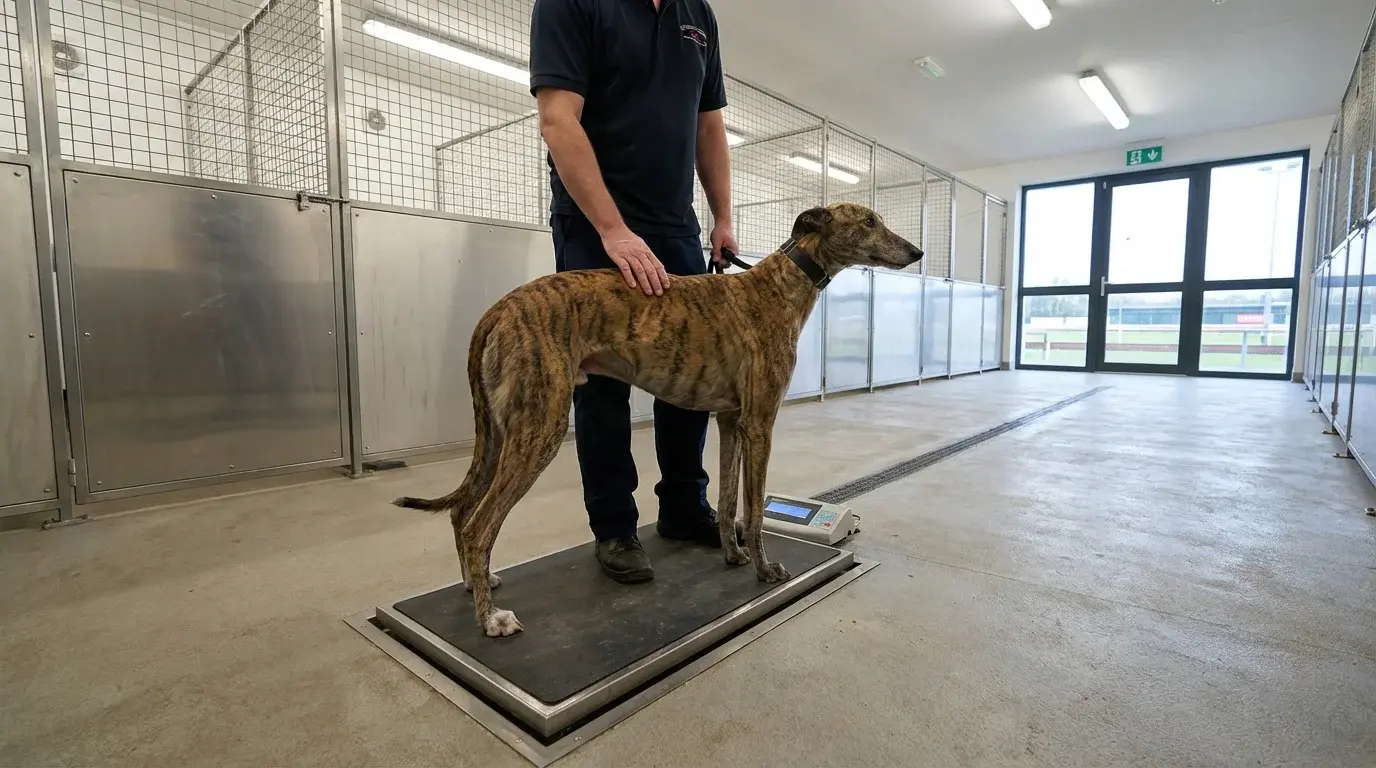
Half a Kilogram Can Be the Difference Between Winning and Losing
Weight is the most overlooked number on a greyhound race card. Punters study form figures obsessively, compare times to the decimal, and argue about trap draws — then ignore a column that tells them, in cold hard kilograms, whether the dog is in the same physical condition as the last time it raced. A dog that has gained half a kilogram since its last run is carrying extra condition into the race. That extra weight slows it down, affects its agility through the bends, and blunts the explosive acceleration it needs out of the traps. Half a kilogram does not sound like much. In a sport decided by fractions of a second, it is plenty.
Weight on its own is not a prediction tool. A dog weighing 33.2 kg tells you nothing without context. But weight as a trend — tracked across four, five, six consecutive runs — tells you whether the dog is stable, improving, or declining in physical condition. That trend, combined with form and time data, produces a far richer picture of the dog’s readiness to race than any single metric can provide.
How Weight Appears on the Race Card
Every UK greyhound is weighed before it races, and the recorded weight appears on the race card in kilograms to one decimal place. A typical male greyhound races between 30.0 and 36.0 kg. Females are lighter, usually between 25.0 and 30.0 kg. These ranges are broad because greyhounds, like humans, vary considerably in build. A rangy, long-striding stayer might race at 35 kg while a compact, muscular sprinter comes in at 31 kg. The absolute number reflects the dog’s build, not its condition.
What matters for prediction purposes is the weight relative to the dog’s own recent history. The race card typically shows the weight for tonight’s race alongside the weight from the dog’s previous run. Some form providers display the weight for each of the last six runs, which is far more useful because it reveals the trajectory.
A dog that has weighed 32.0, 32.1, 31.9, 32.0, 32.1 across its last five runs is holding its weight within a narrow band of 0.2 kg. That stability signals a dog in consistent physical condition — well fed, well exercised, and neither gaining nor losing condition between races. This is the baseline you want to see. Stability is not exciting, but it is the most reliable indicator that a dog will reproduce its recent form.
Trainers manage weight carefully. A dog that is overweight may have its exercise increased or its feeding adjusted. One that is losing weight might be rested or given supplementary nutrition. The weight on the race card reflects the outcome of that management, which means it also reflects the trainer’s judgement about whether the dog is ready to race. A dog presented at a stable, healthy weight is a dog the trainer believes is fit to compete.
Reading Weight Trends
The trend is the message. A rising weight across several runs, a falling weight, or a sudden spike in either direction each tells a different story about the dog’s condition and the likely impact on performance.
A gradual upward trend — 31.5 to 31.8 to 32.1 to 32.4 over four runs — can indicate a dog that is putting on excess condition. Perhaps it is being raced less frequently than usual and carrying weight between outings. Perhaps the trainer has adjusted its diet and the balance is slightly off. Either way, the extra weight is unlikely to help its racing. Heavier dogs are slower out of the traps, less agile through the bends, and more prone to tiring in the latter stages. If the weight gain coincides with a dip in finishing positions or a lengthening of race times, the connection is probably not coincidental.
A gradual downward trend is more ambiguous. In a young dog that is still maturing, slight weight loss can be normal — the dog is converting puppy bulk into lean racing muscle. In an older dog, a steady decline might signal a health issue, overracing, or stress. The key distinction is performance: if the dog is losing weight and running faster, it is trimming down to racing condition. If it is losing weight and slowing down, something is wrong.
Seasonal effects also influence weight trends. Dogs tend to be slightly heavier in winter, when they are less active between races and the cold encourages the body to hold more condition. In summer, the same dogs may race a kilogram lighter. This seasonal fluctuation is normal and should not be treated as a red flag unless it is extreme or coincides with a marked change in racing performance.
Signs of Peak Fitness
Peak fitness in a racing greyhound is a convergence of several indicators, and weight is one of the most reliable. A dog at peak fitness typically races at or very close to its lightest recent weight while maintaining stable form and posting its fastest recent times. That combination — lean weight, fast times, good results — is the trifecta of physical readiness.
Look for dogs whose weight has dropped slightly from a few runs ago and stabilised at the new, lower level. A sequence like 32.8, 32.5, 32.3, 32.3 suggests a dog that has trimmed down and is now holding its racing weight. If the last two runs at 32.3 produced finishes of first and second at competitive times, this dog is at or near its peak. Backing it while it remains in this condition is one of the lower-risk propositions in greyhound betting.
Coat condition, while not measurable from a race card, is another marker of peak fitness that trackside punters can observe. A dog in peak condition has a glossy, tight coat. A dull or loose coat can indicate suboptimal condition. If you are betting at the track rather than online, spending a few minutes in the parade ring assessing the dogs’ physical appearance adds a dimension of information that complements the weight data.
Age intersects with fitness in important ways. Young dogs between eighteen months and three years are generally at their physical peak — strong, fast, and recovering quickly between races. Dogs over four years can still race at a high standard but tend to take longer to recover from hard races, lose weight more easily during intensive racing campaigns, and are more susceptible to minor injuries that do not sideline them entirely but blunt their performance. A steady weight in an older dog is a more positive sign than the same steadiness in a younger one, because maintaining condition becomes harder with age.
Weight Changes That Should Worry You
Certain weight patterns are reliable warning signs that should make you think twice before backing a dog, regardless of what its form figures look like.
A sudden gain of 0.5 kg or more between consecutive races is the most common red flag. This jump typically means the dog has not been raced for a slightly longer gap than usual — perhaps a ten-day break instead of a week — and has put on condition during the rest. Alternatively, it may have had a minor health issue that disrupted its training routine. Either way, the dog is arriving heavier than the market expects based on its recent form, and heavy dogs underperform.
A sudden loss of 0.5 kg or more is equally concerning. Rapid weight loss between races can indicate illness, stress from travelling, or a reaction to a change in environment. A dog that dropped from 33.0 to 32.4 in a week has lost condition quickly, and its physical state is uncertain. Some dogs bounce back immediately; others take several runs to stabilise. The risk-reward on backing a dog with a sudden weight drop is poor unless other factors strongly support the selection.
Erratic weight fluctuation — up half a kilogram, down three-quarters, up again — over four or five runs suggests a dog whose condition is not being managed consistently. Whether the cause is dietary, medical, or environmental, the inconsistency translates into unpredictable racing performance. Dogs with volatile weight records are higher-variance selections and should be approached with caution.
The exception to these rules is bitches returning from season. A bitch coming back from a seasonal break will almost always weigh more than her pre-season racing weight. This is normal and expected. The weight should drop back toward her established racing weight over two or three runs. If it does not — if she remains heavy after several starts — the season break may have disrupted her fitness more significantly than usual.
Weight in Context: One Number Among Several
Weight is a supporting indicator, not a standalone selection tool. A dog at its ideal racing weight drawn in the wrong trap against superior opposition will still lose. A dog half a kilogram overweight but dropping in class and drawn perfectly can still win comfortably. The value of weight analysis lies in its ability to add confidence to selections that already stack up on form and draw, or to introduce doubt about selections that look good on paper but carry a physical question mark.
Build weight tracking into your pre-race routine. It takes thirty seconds per runner to compare tonight’s weight with the last three or four entries. Those thirty seconds can save you from backing a dog that is physically unprepared, or confirm that the selection you like is arriving in peak condition. A small investment of attention for a meaningful return in prediction accuracy.
Get more form guides at greyhoundpredictions.
Also read our bitches in season guide.
