Best Greyhound Betting Sites – Bet on Greyhounds in 2026
Loading...
The Name Below the Dog’s Name Matters More Than You Think
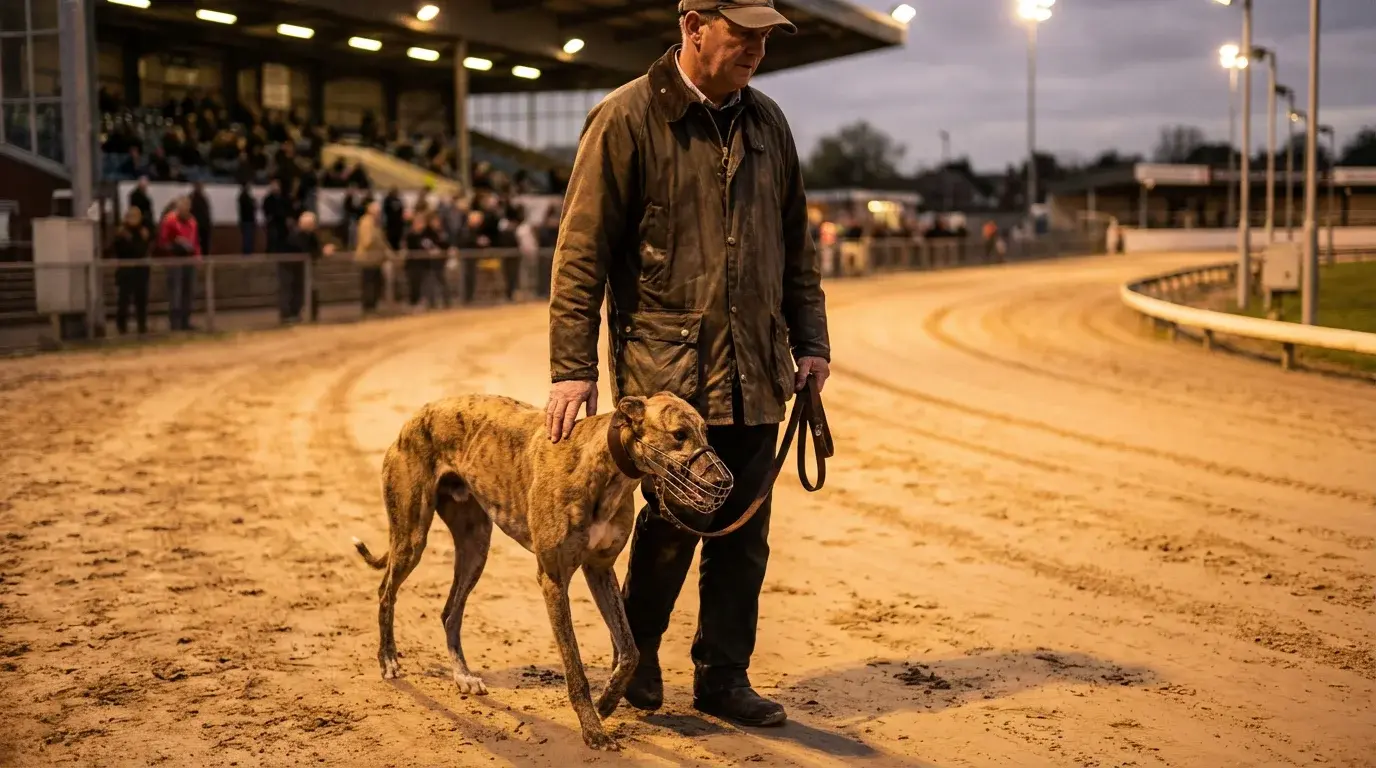
On a greyhound race card, the trainer’s name sits quietly beneath the dog’s details — easy to overlook, rarely the first thing a punter examines. That anonymity is undeserved. Trainers in greyhound racing are closer to the action than trainers in almost any other sport. They manage the dog’s diet, exercise, racing schedule, and physical condition. They decide when a dog is ready to race and when it needs a rest. They choose which track and which grade to enter it at. In short, the trainer controls almost every variable that the dog does not control itself.
The best trainers consistently produce runners that arrive at the track in peak condition, well prepared for the specific race they have been entered in. The gap between a top-tier kennel and an average one is not subtle — it shows up in strike rates, in the condition of the dogs, and in the results. Learning to factor trainer data into your predictions adds a layer of analysis that most recreational punters never consider.
What a Greyhound Trainer Actually Does
A greyhound trainer’s role encompasses everything from daily feeding and exercise to race-day preparation. The dog lives at the trainer’s kennel, typically arriving as a young sapling and remaining throughout its racing career. The trainer develops its fitness through gallops and trials, manages its weight, monitors its health, and determines when it is physically and mentally ready to compete.
Race entry is a critical part of the trainer’s job. A good trainer places their dogs in races they can win — matching the dog’s current form and fitness to the appropriate grade, distance, and track. A trainer who enters a dog in a race beyond its ability is wasting its effort. One who enters it below its ability is missing a winning opportunity but might be managing a longer-term campaign. Reading these entry decisions gives you insight into the trainer’s assessment of the dog’s current state, which is often more accurate than anything the public form figures reveal.
Trainers also manage the physical demands of a racing schedule. Dogs that race too frequently without adequate recovery time deteriorate — their times slow, their weight drops, and their form declines. Trainers who space their runners’ appearances sensibly tend to produce dogs that arrive in better condition than those from kennels that race their dogs every few days. A dog appearing after a ten-to-fourteen-day break from a trainer known for managing their runners well is a different proposition from one racing for the third time in a week from a kennel that prioritises volume.
Kennel Form: Reading the Trainer’s Current Record
Kennel form — the collective recent performance of all dogs trained by a particular trainer — is one of the most reliable secondary indicators in greyhound betting. When a trainer’s runners are winning at a rate above their seasonal average, the kennel is in form. When their runners are consistently underperforming, something is off — perhaps illness has passed through the kennels, or the dogs are not coping with current conditions.
Tracking kennel form requires access to results data by trainer, which is available through most major form providers and through the GBGB’s own data. The metric to watch is the trainer’s win rate and place rate over the past two to four weeks compared to their longer-term average. A trainer who typically wins 18% of their races but has hit 28% over the last fortnight has a kennel running hot. Conversely, a trainer whose rate has dropped from 18% to 9% has dogs that are collectively underperforming.
Kennel form tends to cluster. When a trainer’s dogs are well, they are usually all well — feeding regime, exercise routine, and kennel environment affect every dog in the operation. When something goes wrong — a virus, a change in feed supplier, disrupted routines — it typically impacts multiple runners simultaneously. This clustering effect means that kennel form is a more consistent signal than individual dog form over short periods.
A practical application: if you have shortlisted two dogs in a race and cannot separate them on form and draw, check their trainers’ recent records. If one trainer’s kennel is running 25% above its average strike rate and the other’s is running 15% below, that information should nudge your selection. It is not decisive on its own, but it is a tiebreaker that carries genuine statistical weight.
Trainers to Watch at UK Tracks
The UK greyhound training ranks contain a mix of large, professional operations and smaller, more specialist kennels. The top trainers by volume and win rate are well known within the sport, and their runners consistently attract market support.
Large kennels dominate at certain tracks. At any given GBGB venue, two or three trainers typically supply the majority of runners and account for a disproportionate share of winners. These trainers have deep knowledge of their home track — the surface characteristics, the trap biases, the going behaviour — that gives their runners an edge over visiting dogs. When you see a dog from a locally dominant trainer entered in a race at their home track, that dog benefits from both the trainer’s conditioning and the trainer’s track expertise.
Smaller trainers should not be dismissed. Some of the most profitable angles in greyhound betting come from specialist trainers who handle fewer dogs but manage them with exceptional care. A small kennel with a 25% strike rate across twenty runners per month is producing better results than a large kennel with a 17% rate across a hundred runners — the smaller operation’s dogs are simply better prepared on average. The market often underprices runners from small, high-quality kennels because the trainer’s name is not widely recognised.
Rather than listing specific names — which would go stale within a single season as trainers gain or lose dogs, change tracks, or retire — the approach is to build your own watchlist. Spend a month tracking trainer results at the tracks you bet on. Note which trainers consistently punch above their weight and which consistently underperform. That personal database becomes one of the most valuable tools in your prediction armoury, because it is specific to your betting habits and updated in real time.
How to Use Trainer Data in Your Predictions
Trainer analysis should sit alongside form, trap draw, and going conditions as a standard component of your race assessment. It is not the primary factor — a dog’s own form and fitness come first — but it adds context that raw form data alone does not capture.
Before each race, check two things about each contender’s trainer. First, what is the trainer’s overall strike rate at this specific track? A trainer with a 22% win rate at Romford is a stronger proposition than one hitting 11%, all else being equal. Second, what is the trainer’s kennel form over the past two weeks? A hot kennel supports your selection; a cold kennel adds risk.
Look for patterns in how specific trainers manage class movements. Some trainers are known for placing their dogs aggressively — entering them in races slightly above their current level to test their ability. Others are conservative, keeping dogs at a grade where they can compete comfortably. When an aggressive trainer drops a dog in class, pay attention — it often signals that they believe the dog is ready to win, and trainers who know their dogs intimately are frequently right.
Dogs making their debut at a new track are another area where trainer reputation matters. A dog shipped from one track to another loses its home advantage, but if the trainer has a strong record at the destination track — perhaps they train other dogs that race there regularly — the runner is less of an unknown than it appears. The trainer knows the surface, the bends, and the race conditions, even if the dog does not.
The Trainer Is Not Everything
Trainer data is a supporting factor, not a replacement for form analysis. A well-trained dog drawn in the wrong trap, facing a significant class rise, and racing on unsuitable going will still struggle regardless of the trainer’s record. The trainer influences how well a dog arrives at the track; the race itself is determined by what happens after the traps open.
Use trainer information to refine close decisions, to identify underpriced runners from in-form kennels, and to add confidence to selections that already stack up on form and draw. That is its proper role — a sharpener, not a shortcut. The trainers who consistently produce winners do so because they get the fundamentals right. Your job as a punter is to recognise when those fundamentals are pointing toward a specific dog on a specific night.